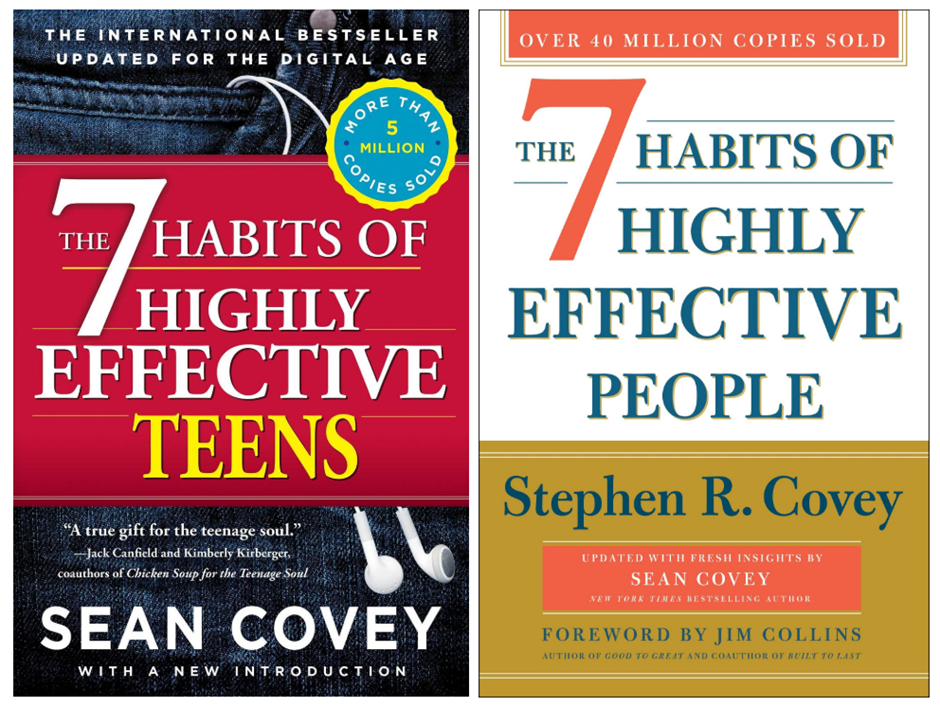

I have read both, and this is my honest take… The two books often appear on every other “must-read self-help books” list, and for a good reason.
Written by father-son duo Stephen R. Covey and Sean Covey, both books are not just tips but timeless principles that can guide you through life.
Yet, many teenagers find themselves between the two.
Should I read 7 Habits of Highly Effective People or Highly Effective Teenagers first?
As a student, after reading both these books and revising thoroughly, I would like to share my insights.
No, They Aren’t The Same:
You may assume they are the same with slight differences, but they’re actually not. Experience taught me so.
While Sean Covey covers the same 7 habits and structures his father established after years of research, the application and presentation are tailored quite differently for the respective readers’ minds.
Stephen’s Book:
Stephen’s book elaborates on the 7 habits that he studied for years. Each part deeply covers the fundamentals behind the concepts.
I particularly love the Character and Personality Ethics part. It explains why these habits are necessary for long-term life success before jumping into them.
One key takeaway in the book is that there are no quick fixes. If you consistently apply these habits, you will see results over time.
And once you internalize these habits in your life, you will undoubtedly be more effective in your life.
Sean’s Book:
Sean nailed his job of simplifying the principles for teenagers. The latest edition of the book features a modern cover and engaging style, carefully designed for teenagers.
I completed Sean’s books in just 3 days — its relatable examples, interactive graphics, and friendly tone make it an enjoyable read.
I especially liked the baby action steps at the end of each habit.
So, Which One’s For You?
I am glad I could read both. But I wished I had approached it a bit differently. Here’s what I recommend:
- If you are 13–15 years old, a regular reader or not, I highly recommend starting with “7 Habits… of Teenagers” first.
Dive in, scribble some notes, and reflect on these habits regularly. This book can serve as a good roadmap for teenhood.
Sean’s book can do you good alone, but once you think you have practiced these habits long enough, you can start with Stephen’s book to go deeper.
- If you are a bit older like me, Sean’s book can still be beneficial (especially if you’re new to reading self-help)
Afterwards, you should directly read Stephen’s book. A rich understanding of the principles can help you integrate them into your life better.
Closing Thoughts:
In conclusion, both books can provide valuable insights at different stages of personal development.