Iran : A Nation of Rich History and Complex Challenges
What is regime ?
A regime refers to a system or government or a set of rules and norms that govern a country, organization, or institution. It can describe:-
- Government system : A country’s political structure (e.g. democratic , authoritarian , monarchial ).
- Rules and norms: A set of guidelines or regulations governing behavior (e.g., economic regime, social regime )
- Period of rules : A specific governments tenure or era (e.g. a president’s regime)
In politics, “regime” often implies a particular government or leadership, sometimes with negative connotations. ( e.g., authoritarian regimes )
“A regime’s true strength lies not in it’s power , but in it’s people’s willingness to obey”
The Dark Past of Iranian Regime
(Revolution to Repression)
With reference to Syed Muzammil, in the modern age, people are divided into two camps: one is evil, and the other is good. There’s no grey area; you have to pick a side. This is what people are saying about Iran, where people don’t want American or Israeli occupation, but they also don’t want to live under their current government. You’ve probably heard about the protest in Iran and how Iranians abroad are celebrating and congratulating each other on the perceived weakness of the IRGC and Khamenei. Many have said it’s because of their affiliation. Some people say that Iran’s people have no connection to their government, but others claim it’s just propaganda that they are unhappy with their regime. I disagree, because to understand this, we need to look at the past 50 years since the 1979 Islamic Revolution.
- Has the government given justice to it’s people?
- Has it treated them fairly?
- Has it implemented Islamic principles or taken away their rights?
Today, we’ll investigate this and explore why some people might want to see the back of their regime, despite it standing up to imperial powers. This isn’t saying that if Iran’s laws and repression are oppressive, the solution is to replace them with people like Netanyahu or Trump. Instead, it’s about presenting the Iranian people’s narrative and perspective, which often gets lost in geopolitical analysis. Let’s focus on understanding where the Iranian people stand. They’re supporting the regime because they are under attack and feel they need to unify, but their heart say otherwise. This has been expressed in protests in 2022, 2016, and before that, every 2-3 years. Some people will just curse when they hear this, because they are emotionally invested, but they don’t realize that Islam says an oppressive ruler or state can’t survive and is actually destroying Islam itself. It’s easier to think in binaries, two paths, one choice.
People create a “good vs evil” narrative or support their own group mentality, no matter the cost. So, is the current conflict a battle between the “greater evil” (Trump and Netanyahu) and “lesser evil” (IRGC), or is it actually about good vs evil? Iran’s repressive laws are largely due to Britain and America’s interference. In 1953, they overthrew democratically elected PM Mohammed Mosaddeq in operation Ajax, installing Reza shah Pahlavi, who reserved laws and prioritized Western interests. This led to the 1979 revolution, supported by various groups , including leftists and secular nationalists , who initially backed Khomeini to oust the Shah . But after the revolution , every group not aligned with the far rights was gradually eliminated.
If we look at the constitutional structure, a referendum was held in 1979, and the Guardianship of the Jurist system was established. The Islamic Republican party (IRP) was formed established. The Clerical orthodoxy took control, abandoning the previous state’s structure. Although a president and parliament exist, the Supreme Leader holds ultimate authority. Article 5 is invoked, allowing the supreme leader to appoint members of the Guardian Council, the Supreme Judicial Authority, and the IRGC commander. They can declare war, dismiss the president, and control the military. This shows that one person still rules, but with a structure. The difference is that there’s a structure now, unlike in the monarchy era.
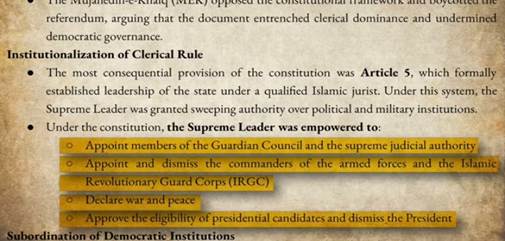
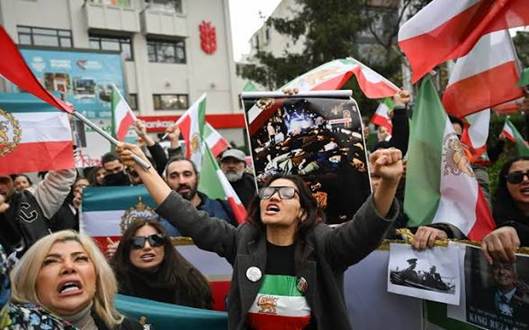
The system is a clerical theocracy, with the president and parliament subordinate to the Supreme Leader. Many leftists who supported the revolution were suppressed by the IRGC. The structure exists, but the Supreme Leader’s authority is paramount. The Iranian people seem divided to regime change, with some supporting the current government and others backing opposition figures like Reza Pahlavi, the exiled son of Iran’s last shah. Recent protests, sparked by the economic grievances and rising inflation, have spread across all 31 provinces, with demands ranging from economic reforms to the overthrow of the government.
“A regime’s true weakness is its inability to listen”
Some protestors are chanting “Long live the Shah” and supporting Pahlavi, while others are demanding an end to the Islamic Republic. The government’s violent crackdown has led to the thousands of deaths and arrests, further fueling public anger. It’s worth nothing that while some Iranians support regime change, other remain loyal to the current government . The regime still maintains control, and security forces have remained loyal, suppressing protests with force.
After the revolution, the MEK party’s leaders, including Masoos Rizavi, were bared from runing in elections. In 1981, MEK was officialy banned, and thousands of it’s members were arrested and eliminated.
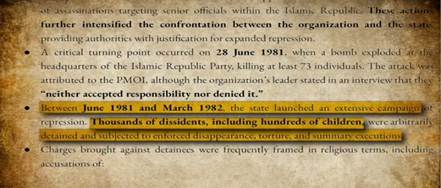
Those who spoke out were targeted, and many were charged with “apostasy” and “warning against God”. In 1981-82 , thousands of MEK members were forcibly disappeared and executed on trumped-up charges. In 1983, leader member of Tudeh party were arrested, and many were tortured, forced to make false confessions, and executed.
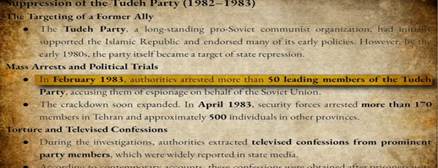
In 1984, 10 mainstream Tudeh party leaders were hanged. 1988 was particularly bloody year, with 2,800- 5,000political prisoners executed in a “large scale cleansing” of political prisoners. some estimates put the number at 12,000. The killings were carried out in two phases, targetting MEK leaders and leftists , followed by intellectuals, Marxists, Liberals and other oponents of regime .Ironically 99% youth of pakistan is standing with AYotullah, and IRGC, but history tell us something different that the regime selectively eliminated every single leftists, none were left. A 3 member “death commission “ was tasked with deciding who would be executed , with orders to “Leave no non-believers” and “no one who supports MEK”.
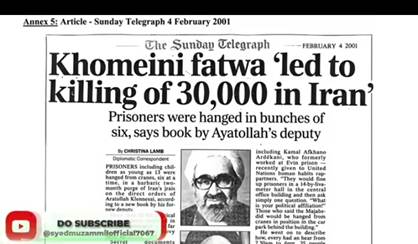
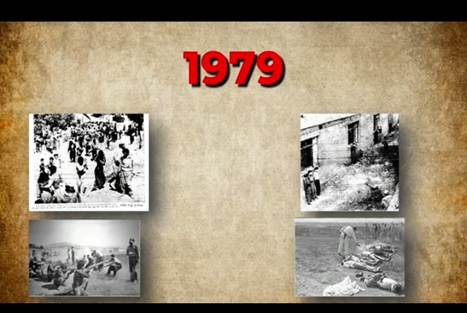
Around the same time, minority communities were targeted. In 1979, the Kurdish Democratic party was banned, and an estimated 10,000 Kurds were killed. In 1988, a grand clean-up operation led to the mass execution of political prisoners. Hussain Ali, next in line to succeed Imam Khomeini, publicly condemned these actions as “the greatest atrocity “and “mass murder”. For speaking out, he was removed from the succession line. In line 1997, a more moderate era began with president Mahmoud Khatami’s election. He broadened Iran’s political vision, launching the “2nd of khurdad movement”, advocating for press freedom, and saying reforms should precede revolution. This period saw unprecedented growth in media and some societal freedoms.
“A regime that fears its people is a regime that’s already lost”
“Societal, cultural, and political freedoms emerged during Khatami’s presidency. Republican governors promoted these, and some even vowed to investigate intellectuals’ murders. However, this was dubbed a “velvet revolution”, and the regime cracked down in 2000, shutting down 1,000 newspapers deemed a national security threat. In 2009, the Green movement protested Ahmadinejad’s disputed election win, calling it fake. The regime responded with force, killing 40 protesters, including Nida Agha Sultan, whose death sparked global outrage. In 2019, a fuel price hikes sparked brutal protests, with 304 killed, according to officials. Some sources claim 1,500 died. The regime’s stance: crush dissent, no mercy. In 2022, Masha Amini’s death in morality police custody sparked protests in 160 cities and 31 provinces. Kurdish and Baloch communities joined, as she was a kurd. The regime responded with force, killing 500, executing 7, and suppressing dissent. In 2026, protests against inflation and for reform led to massive crackdown. HRANA reports 6,800 verified deaths, while the regime claims 3,117. CHRI says 200 were schoolchildren. Journalists, Lawyers, and dual nationals were targeted.In 1980, leftists were executed, with rumors of virgin women being married off to prison guards to save them. Similarly, allegations surfaced in 2009’s Green movement , with politician Mehdi Karobi alleging prisoner abuse. Morality police enforce strict dress codes, and cultural repression is common. Dish TVs are banned, but widely used. Law’s restricts women’s rights: married women needs husband’s permission for passport and travel. The official marriage age is 18, from shah’s era.
“The most dangerous regimes are those that claim to be the guardians of morality”
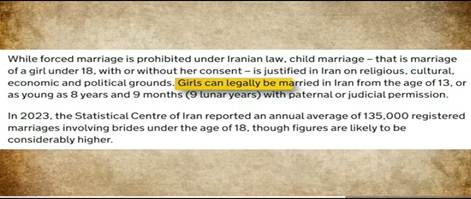
Official marriage age in Iran is 13 for girls , 15 for boys , with court permission for younger girls.
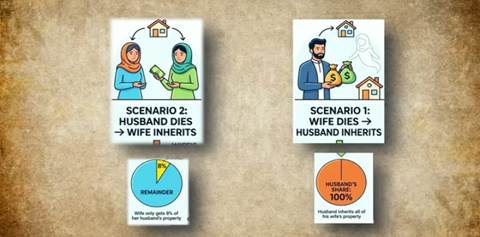
The law recognizes a man’s right to stop his wife from working, as he’s considered head of household. Inheritance laws favor men: a widow gets 1/8 of property, while a husband inherits everything if his wife dies. Men inherit twice as much as women. Women can’t be presiding judges, though some are family court judges (121). They’re largely excluded from legal and contractual matters.
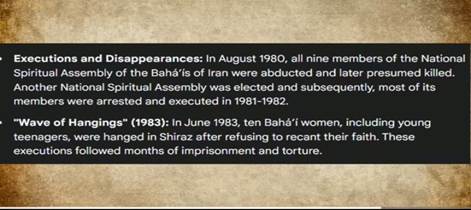
Iran’s laws are restrictive: a mother loses child custody if she remarries. Despite high female literacy, there’s a contradiction – women are educated but expected to prioritize domestication. Minorities face persecution. A 1991 government memo allowed expelling students identified as belonging to certain groups. Many Baha’s lost homes, lands, and lives. Over 200 were executed since 1979, with 10 hanged in 1983 alone. No Sunni has served as minister since 1979. Baloch and Kurdish communities face similar struggles. Religious practices are discouraged, and Sunni’s face barriers in government jobs. The regime checks ideological alignment before hiring. Kurdish people suffer severe poverty, with 45% of Iran’s prisoners being Kurdish. Baluchistan faces extreme marginalization, with many denied birth certificates. Iran’s issues include massive inflation , political repression , power centralization , lack of democracy , discrimination , patriarchy , minority persecution , and suppression of dissent . these faults have been exploited by external forces.
“Regimes are like houses , they are built to fall”
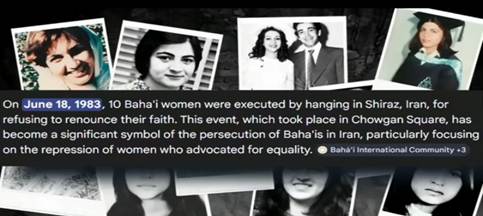
We shouldn’t turn a blind eye to Iran’s flaws just because of our emotional association with the regime. If you’re truly committed to justice, condemn oppression, whether it’s external or internal. Iranians have always suffered, whether at the hands of external forces or their own regime. The numbers are stark : 1,500 Iranians killed in recent conflicts , and the regime’s own brutal suppression. We shouldn’t acknowledge Iran’s regime is as oppressive as external threats. Let’s criticize American expansionism, but also recognize Iran’s regime as a killer of its own people . By Taking the risks for saying this, but the regime’s brutality is undeniable. Condemn the violence, whether it’s Israel, America,or the Iranian’s regime itself.
Let’s view the Iranian’s conflict through the lens of colonialism, but also acknowledge the regime’s atrocities. We can oppose the US and Israel’s actions without supporting an oppressive regime that kills its own citizens. I’m against Us and Israel’s actions because they harm ordinary Iranians, not because I’m siding with IRGC or the regime. The regime delivers corpses to families; that’s not something to support…….
“Regimes are built on a fear, but revolutions are built on hope”
Now I have a few question that you might answer .
- What are the primary drivers of the current protests in Iran, and how do they differ from the past movements?
- How does the Iranian Regime’s treatment of minorities , such as Kurds and Baloch, impact the county’s stability?
- What role do external actors, like the US and Israel, Play in shaping Iran’s internal politics and protests?
- Can Iran’s regime survive without significant reforms, or is a transition to a more inclusive government inevitable?
- How do Iran’s economic challenges, such as inflation and sanctions, contribute to public discontent and protests?
- What are the potential consequences of international support for Iranian opposition groups, and how might this impact the regime’s grip on power?