

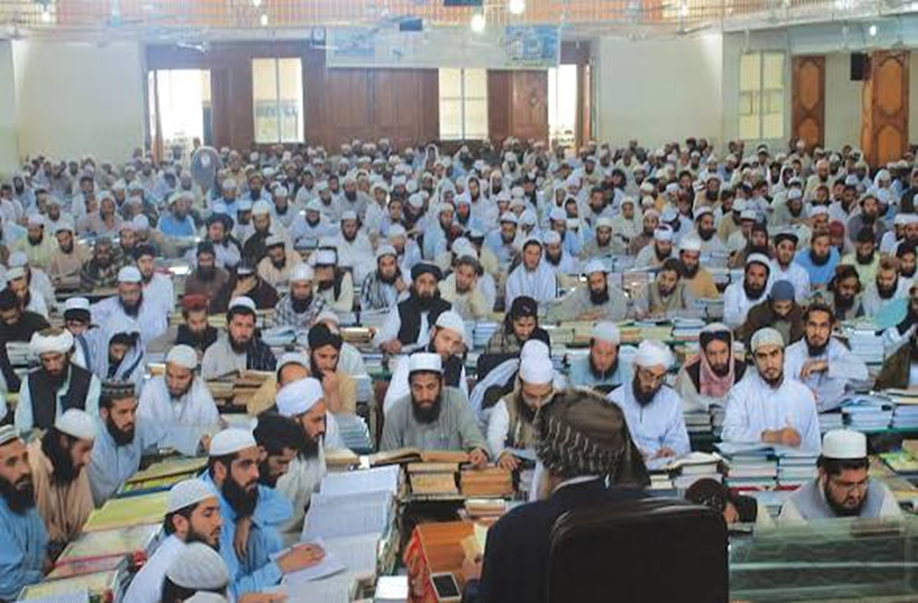
“The killing of a student due to alleged torture in a madrasa has led to the accused being handed over to the police on a three-day physical remand”. Reports suggest that there are around 43,000 madrasas in Pakistan, while another report from 2023 estimates the number could be approximately 55,000—possibly because around 8,000 of them are unregistered. Additionally, the DGRE website states that about 35,000 madrasas exist in Pakistan.
“Corporal punishment and abuse in any institution of learning, including madrasas, is a violation of the child’s right to dignity and protection under Article 19 of the UN Convention on the Rights of the Child.”
This reflects a vast educational hierarchy. If our universities can face decline, and our schools can deteriorate, then is it considered wrong to talk about reforms in the madrasa education system? Can we not raise concerns about the existence of torture within some of these institutions and the need to protect children from it—something that is also our moral and religious duty?
If we want to safeguard the reputation and teachings of these institutions from allegations and defamation, then shouldn’t we talk about identifying and removing the “black sheep” within the system? Or should we remain silent and avoid questioning them, assuming that any criticism would only bring disrepute?
I am writing about specific people — those who have become a disgrace to the call to prayer and to religion itself. They must be removed. And I’m not limiting this discussion to only one sector; this applies to all religious institutions in Pakistan where torture has become a systematized structure. I am raising this issue because of the heartbreakingly case of a 12- or 13-year-old child who returned to the madrasa after taking five days’ leave. The reason for his leave was that he had reported to his grandfather that inappropriate and abusive demands were being made of him — the meaning of which is clear. When he returned to the madrasa, reports suggest that he was subjected to brutal torture for nearly five hours. According to accounts, several individuals took turns abusing him in a planned and organized manner. Students who witnessed the incident gave interviews describing how the child was kicked with such force, as if someone were striking a football from a distance. His entire body was left exposed to this horrific violence. He was dragged, pushed, beaten repeatedly, and subjected to unspeakable cruelty. What makes this even more tragic is that when questions were raised afterward, attempts were made to distort what had happened. Yet the child had reportedly tried to signal to his parents about his suffering. But what could his parents do? His father was working away from home, like countless parents across Pakistan who are forced by poverty to send their children to these institutions. The reality is that a large percentage of families sending their children to seminaries belong to low-income backgrounds, often earning less than 6,000 rupees a month. When the state fails to provide proper education and social support, parents are left with only two choices: either send their children into child labor, or place them in residential seminaries where at least they will receive food, clothing, shelter, and some form of education.
“The walls of a madrasa must protect children, not hide their cries. Silence in the face of abuse is complicity.”
Meanwhile, the elite — whether in Pakistan or abroad, whether in France, Sweden, or elsewhere — send their own children to international schools, IB institutions, and top private colleges. But these poor children, abandoned by both the state and society, are left defenseless. No one reaches them, no one protects them, and often no one even hears their cries. And the cruelest part is this: whenever someone speaks up for these children, whenever someone demands accountability and protection for them, they are silenced. Fatwas are issued, accusations are made, and their voices are suppressed. The real question is: if speaking to protect innocent children is treated as a crime, then what does our silence make us complicit in?
In June 2001, there was a case that is impossible to forget. An eight-year-old child was subjected to severe abuse. The perpetrator knew that the child might go and testify in court, so to silence him, he inflicted such brutal violence that the child suffered critical brain injuries. After about ten days, the child died.
“No text of Shariah permits the abuse of a child. Whoever harms a student in the name of teaching has betrayed the very spirit of the Prophet’s method.”
Then there is the May 2008 case from Bahawalpur — one that, in my view, can never be erased. A seven-year-old boy named Aqib, who was visually impaired, became a victim. A clerk — I am naming him deliberately because hiding perpetrators is itself shameful — tortured him brutally. The child was hung upside down for hours and beaten with a club. This led to critical brain damage, and ultimately, his death. When his body was found, it was in a horrific condition. These are just a few examples. I cannot list hundreds of cases or thousands of incidents here, but I can say with confidence that in Pakistan, the reporting rate of such cases is likely no more than 1–2%. Most incidents never come to light. Communities often suppress the truth, or cases are settled informally before they can be recorded. Powerful local influences intervene, and justice is buried before it even begins.
How many children will continue to be traumatized like this before we are willing to talk openly? Just as we have demanded reforms in universities, schools, and other institutions, it is absolutely essential to talk about reform in this system as well. There is also a long historical context. In 1947, at the time of Partition, there were 245 madrasas in Pakistan. By 1971, the number had risen to around 900 — meaning roughly 500 new institutions were established over 25 years. Then came the era of Zia-ul-Haq. By 1988–89, there were around 8,000 registered and approximately 25,000 unregistered madrasas — bringing the total close to 33,000. This means that from 1971 to 1988, the number jumped from 900 to over 30,000. The question is: what happened in those 15–17 years that caused such an explosive increase? One explanation often given is that the state and ruling elite, pursuing their own vested interests during that time — particularly in the context of geopolitical strategies — supported the rapid expansion of such institutions. During the Cold War era, especially under figures like Jimmy Carter, significant foreign funding flowed into the region, particularly related to the Afghan conflict. Some analysts argue that this funding contributed to the growth of certain types of religious institutions.
“Real knowledge creates humility and mercy. Where there is violence against children, there is no true elm — only ignorance in the garb of religion.”
History shows that when institutions are created for short-term political or strategic purposes, they can later become difficult to manage. Various governments have, at different times, supported groups or structures that later became problematic and had to be dismantled or controlled. The core point remains: among these institutions, there are many genuine and sincere ones that deserve protection and respect. But those that were created or allowed to operate under questionable conditions — or where abuse, exploitation, or violence exists — must be held accountable. If we truly want to protect children, preserve the dignity of religion, and strengthen society, then acknowledging the problem and calling for reform is not an attack — it is a responsibility.
“The teacher who raises his hand on a child without right has violated the trust of Allah and His Messenger. A madrasa is for tarbiyah, not torture.”
Billions of dollars were distributed for this work, and those funds were invested here under the justification that it was for the service of religion. It was said that this investment was meant to educate children — to develop their understanding of religious philosophy, theology, jurisprudence, and the intellectual traditions of Islam, including its epistemology and sciences. These institutions were supposed to nurture knowledge and learning. However, in practice, this expansion was also tied to the implementation of the foreign and domestic policies of Zia-ul-Haq. It became part of a broader process of ideological shaping and militarization within Pakistan. Now, I am not saying that everyone in these institutions is involved in violence. But a serious question must be asked: among those who do take up arms, why does a significant proportion come from these backgrounds? This question itself points toward deeper structural issues. What many people defend in the name of religious education should first and foremost focus on genuine learning and moral development — not serve political or strategic agendas. When systems become formalized under state patronage, they can grow so powerful that even the state begins to fear their street power. At that point, legislation and governance itself start getting influenced or pressured by these forces. For example, in 2019, during the government of Imran Khan, an important initiative was introduced. The aim was to bring madrasas under the Ministry of Education so they could be properly registered, regulated, and audited. A body called the Directorate General of Religious Education (DGRE) was established to oversee this process.
“The house of God should be the safest place for a child. When it is not, the house has failed its Master.”
The idea was simple: all such institutions should register, fall under a formal authority, and ensure transparency — especially regarding their operations and funding. However, resistance emerged. Some groups, including religious political organizations, argued that they should not fall under the Ministry of Education. They claimed that they were not formal educational institutions but rather functioned like NGOs. What is important to understand is that many of these institutions were already being treated as NGOs and were regulated under the Ministry of Industries instead of the Ministry of Education. This classification allowed them to operate outside the stricter educational oversight framework. When the proposal came to bring them under the education system, concerns were raised. One key reason was that formal registration under DGRE and the Ministry of Education would require financial transparency — including proper audits and disclosure of funding sources. This resistance highlights a critical issue: without transparency and accountability, it becomes difficult to ensure that these institutions are truly serving their intended purpose of education and welfare.
There are multiple registration pathways. An institution can register with different bodies — with provincial authorities, through donor-linked courts, with the Deputy Commissioner (DC) under the Societies Registration Act, or through other channels. And realistically, what objection is a DC going to raise? If one authority refuses, they can simply go to another. In practice, refusal is rare, and even if it happens, there are alternative routes available. As a result, the level of scrutiny becomes almost zero. No one properly checks: Who are the teachers? What is their mental health condition? What training do they have? What kind of records do they maintain? Are there complaints against them? Are children being harmed? These questions are largely ignored. Many of the worst incidents have occurred in unregistered centers. After such incidents, they are often covered up or “managed,” while thousands of other unregistered institutions continue to operate without oversight. When the Financial Action Task Force placed Pakistan under increased monitoring, estimates suggested that between 2018 and 2025, the country lost around $20–30 billion in potential investment. Yet even today, many of these institutions continue to register under the Societies Registration framework, which involves minimal scrutiny. They present themselves as charities, making it easier to receive funding from various sources without strict accountability. If we look at history, we do not find a model where religious duty was institutionalized in this way with salaried structures tied to capital control. During the time of Prophet Muhammad, core religious practices — like giving the call to prayer (adhan) or serving the — were voluntary acts. People would come forward willingly and even request the opportunity to serve.
“There can be no keener revelation of a society’s soul than the way in which it treats its children.”
But when religion becomes tied to capital-driven institutions and salaried hierarchies, power can become concentrated. That power, if misused, can turn a student-teacher relationship into something resembling a master-slave dynamic. This is not just theoretical. I am not writing from foreign education or elite institutions — I have seen this . I have heard and observed how children are treated. They are made to clean, cook, run errands, and perform labor alongside their studies. If they speak up, they are silenced harshly. They have no defence, no protection, and no safe outlet. They live, study, and endure in the same confined environment. Imagine the reality of such conditions. There may be thousands of cases that never come to light — lives affected or lost before anyone even hears about them. If we talk about curriculum, there is little meaningful incorporation of modern, technocratic education in many of these places. On paper, the curriculum may look comprehensive, but implementation is weak. And when the state itself fears confronting such systems, enforcement mechanisms remain ineffective. A common argument is that modern education will “corrupt” religious values. But people forget that this is the same religion that once led great intellectual and scientific advancements — not just through military power, but through knowledge. The so-called Golden Age of Islamic civilization — spanning centuries — produced scholars who shaped medicine, philosophy, and science. Take Ibn Sina, for example. Could someone like him emerge from an environment where a child is broken physically and mentally, treated harshly, and denied intellectual freedom? Today, for many students, the system reduces learning to memorization. They are told that success is simply about how much they can memorize and recite — not how much they understand, question, or create. This is the core issue: when education loses its spirit of inquiry and growth, it cannot produce thinkers — only repetition.
“If you are neutral in situations of injustice, you have chosen the side of the oppressor
There is another major issue here. Millions of Pakistanis are part of this system, and when you place a very limited, narrowly focused form of education in a child’s hands, that child becomes confined to that same narrow system for life. Research suggests that around 86–87% of students who graduate from these seminaries end up being reabsorbed into the same ecosystem. Why? Because they have no alternative skills. Where will they go for jobs? Which NGO will hire them? Which multinational company will employ them? Which government sector can they realistically enter? If neither external exposure reaches their minds nor internal intellectual development is encouraged, how can a healthy society ever be created? There are millions of students learning within this system without any meaningful exposure or intellectual expansion. It becomes like an intellectual “black hole” where knowledge cannot properly reach them. What I have personally seen is even more troubling. Many of these children come from extremely poor backgrounds. Because the state fails to provide proper education, they are brought into these systems. Then, due to lack of resources, some are sent out to beg — to bring food, bread, clothes — you can see them at traffic signals and in streets. From the very beginning, they are conditioned to believe that getting two or three meals a day is the greatest achievement in life. They are never allowed to think beyond survival. Instead of expanding their horizons — learning theology deeply, studying comparative religion, philosophy, or spirituality — they remain trapped in a very limited framework. Before they can question or grow, they become part of the same system. It becomes a cycle of abuse: if a child speaks up even slightly, they are punished severely. I have personally witnessed children being beaten to the point of serious injury. There is also a monopoly over educational narratives. If someone quotes from religious texts critically or analytically, they are attacked for it. This creates an environment where examples cannot even be discussed freely. It resembles a closed intellectual space where only one interpretation dominates. Now imagine a child who has lived in overcrowded conditions, perhaps sharing a small room, facing emotional distress, separated from their parents for months, crying at night, confused and afraid, subjected to continuous harsh treatment. What happens to that child’s emotional and psychological balance?
And then that same child grows up to become a teacher — what kind of behavior will they pass on to the next generation? This is why I strongly believe mental health screening should be mandatory for anyone teaching children — whether in schools or seminaries. Just like you would not let someone drive a car without a license, how can you allow someone to shape a child’s mind without evaluating their psychological fitness? Even powerful individuals have raised concerns about the risks associated with such unchecked systems. So the question is: if those at the top are worried, what chance do ordinary people have? Will the political elite reform these institutions? Around 65% of seminaries are said to operate under specific religious-political networks. Can anyone openly challenge them? There is no central monitoring. No one knows what the curriculum truly looks like in practice, what teaching methods are used, or what qualifications the instructors have. Anyone can open an institution on a street corner, and no one will question them — as long as they have backing from a powerful group. Under the Societies Registration framework, one registration can lead to multiple branches. For example, someone may register one seminary but operate ten others without proper oversight. The level of violence that can exist inside these places often goes unreported because parents are helpless. If they speak up, their child may lose access to shelter, food, and education. They are told to stay silent to protect the “reputation” of the institution — and so they remain silent.
This silence is not acceptance — it is compulsion.
Many of you may have seen the recent documentary Broken Innocence, which highlights how a cycle of abuse exists within certain institutions. So what is the solution? The first step is to confront those who label any discussion about reform as “blasphemy” or disbelief. These people must be challenged directly. Ask them: who are you to equate speaking against (oppression) with disbelief? We are arguing for the protection and dignity of religion, while you are defending silence that allows abuse to continue. If you ask us to stay quiet, then you are the ones contributing to the defamation of religion — not us. The first solution is to generate open debate. Only then will awareness spread. We are not saying these institutions should be secularized. They are religious institutions and should remain so. However, they cannot serve as a complete alternative to basic education. A complete education system requires subjects like computer science, mathematics, physics, and other disciplines to be uniformly implemented through the state’s educational structure.
“There is no trust more sacred than the one the world holds with children. There is no duty more important than ensuring that their rights are respected.”
The problem is that many of these institutions operate independently. At times, they become so powerful that they are difficult for the state itself to regulate. If they are not under a single authority, then how can accountability be ensured? After the tragedy of the Army Public School attack, and under frameworks like the National Action Plan and pressure from Financial Action Task Force, many promises were made. But those promises must be implemented in reality, not just on paper. Currently, there is no proper inspection framework in Pakistan. Financial audits are not conducted effectively. No one consistently verifies where funding comes from or what agenda may be influencing these institutions. Ironically, while people accuse others of following a “Western agenda,” many institutions expanded during earlier periods with foreign funding themselves. Another major issue is the absence of a unified legal framework for boarding institutions. These seminaries function like boarding schools — children live and study there — yet there are no strict regulations governing living conditions. There should be surprise inspections, oversight visits, and proper checks to ensure children are not being kept in overcrowded, unsafe, or abusive environments. Child protection protocols must be mandatory in all seminaries. Corporal punishment should be completely prohibited. You cannot instill knowledge through fear and violence. Breaking a child physically or mentally will not help them understand religion — it will only create damaged minds. Every institution should have a designated Child Protection Officer responsible for ensuring the safety of students and reporting any abuse immediately.
“He is not one of us who does not show mercy to our young ones and respect to our elders.”
Additionally, all teachers and staff should undergo background checks. A centralized database should exist where their qualifications, history, and any complaints are recorded. Regular training workshops should be conducted to improve teaching standards and provide exposure to broader knowledge. Many teachers themselves lack exposure — so reform must include them as well. Another critical issue is the “honor culture” that silences victims. This must end. Children and parents should not feel ashamed to report abuse. Shame belongs only to the perpetrator — not the victim. Most importantly, the state must enforce its authority. Preventing violence is fundamentally the responsibility of the state. If violence continues unchecked within its borders, then the failure lies with the government. The legitimate use of force belongs only to the state — not to any institution, individual, or group. One of the root causes is that around 25 million children in Pakistan are out of school. Who failed them? The state failed. Who did not provide education? The state did not. As long as children remain out of schools, they will continue to enter these systems — not out of choice, but out of economic compulsion. They do not go there purely for religious education; they go because they need food, shelter, and survival. If these 25 million children are brought back into schools, given proper education, protection, and opportunities, only then can this cycle begin to break.