

Introduction
Picture a world in which your physician is a computer, your teacher is a computer program, your co-worker is a machine, and the novel you are reading was written by a machine that has read every other novel ever published. Now envision a world in which an artificial system can create music that will elicit tears of sorrow, depict pictures of breathtaking beauty, argue a legal case with greater precision than any human attorney, and have a conversation so natural and nuanced that you couldn’t tell it was not being led by a human.
This is not a future that is far away. It is, to a large extent, the world that we are already living in. The question now before humanity in an unprecedented manner is not if but how Artificial Intelligence will change the future of humanity — it already has. The question is, how will it change us – our identity, our work, our relationships, our values, our sense of purpose, our understanding of what it is to be human at all?
The era of Human AI Futures has come. We’re woefully unprepared for the most serious implications of it.
Tools to partners: The evolution of intelligence.
Throughout the history of humanity, we have developed tools to augment our body and brains. The wheel extended our legs. The printing press has lengthened our memory. The calculator gave us a new way to do arithmetic. Internet has made the access to information extended. All these innovative technologies have had an impact on society in many ways, opening up new possibilities and making old skills irrelevant, changing the power dynamics in society and creating new ones.
While AI is similar to many of the tools that have existed before, its ability to handle tasks is significantly different because it is qualitatively different from anything that has come before it. Past tools brought some human abilities to bear, but were all passive tools. Unlike AI, the human brain cannot learn, adapt, improve, generate, reason, or outperform humans in some areas simply because it was programmed to do so, but rather because the human brain has acquired these skills from exposure to a huge amount of data.
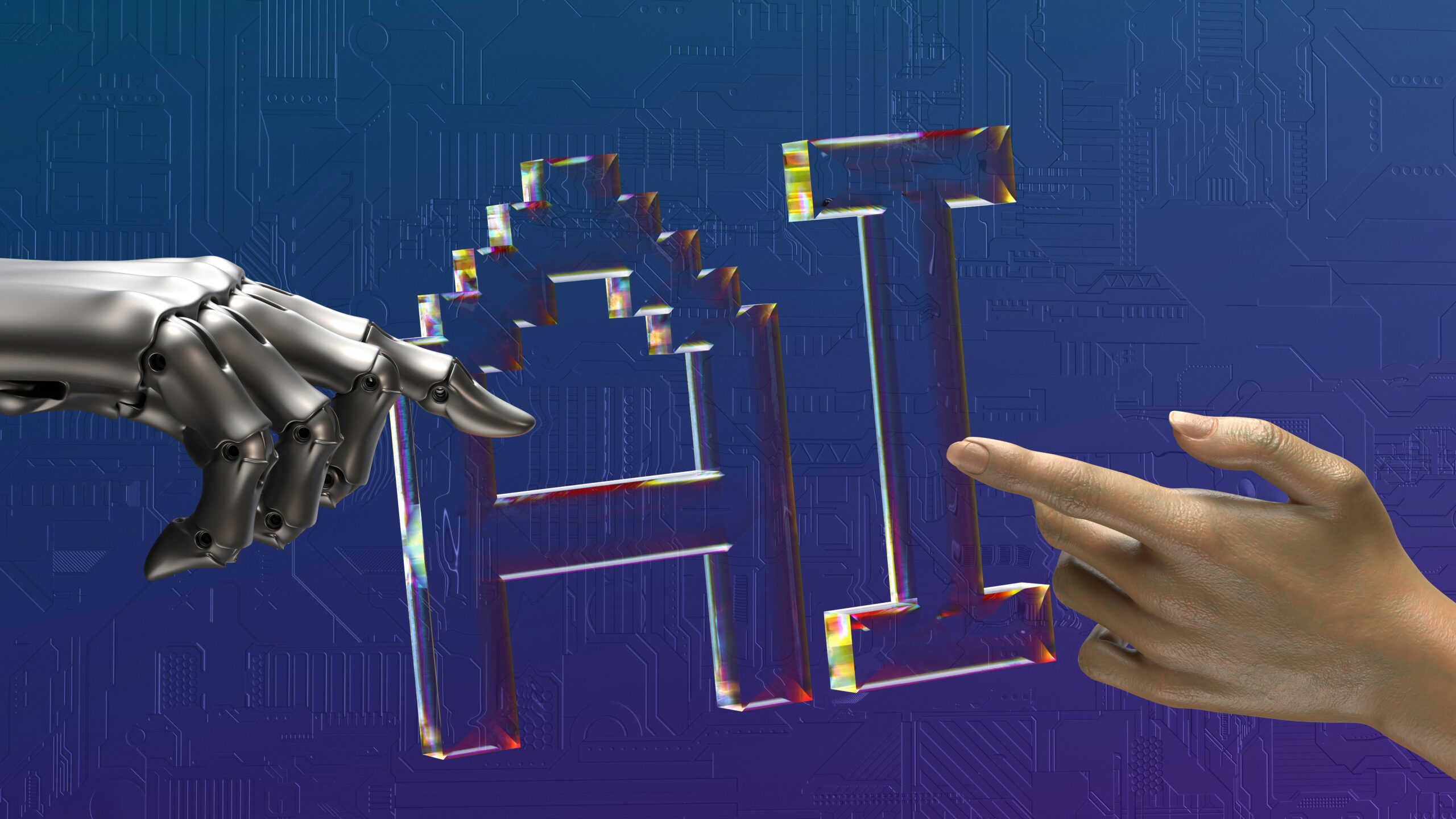
Once a machine not only can help humans think, but it can also think things through and go further than humans in particular spheres, the relationship between human and machine also changes basically. AI is not just a tool anymore — it’s a partner, a colleague like no other: AI never gets tired, AI never forgets, AI never asks for a pay check, and in some very limited fields, already outperforms all humankind.
This transformation poses new questions that mankind has never had to address. What will the human race look like if machines can do nearly everything that humans can do — and do it better? What is uniquely, ineligibly “human”? How, in other words, can we create a future where AI contributes to and does not detract from human flourishing?
The changing nature of employment and its function
Work has been and still is an important part of the human life and of its social meaning for most of human history. Who we are is very much how we act. Our jobs are an integral part of who we are, where we live, how we spend our day, and how we believe we are contributing to the world.
With the advent of AI, this partnership between man and work is now being challenged at a pace and scale like no other in history. While AI could replace routine and physical work, the current generation of automation is likely to impact cognitive and creative tasks, unlike previous generations. Legal research, financial analysis, medical diagnosis, software coding, graphic design, content writing, music composition — all of these areas, in which humans have spent years learning and training, are now being shaken up by AI systems that can handle basic tasks in these fields at a higher speed and cost and, in some cases, at a higher accuracy rate.
The economic consequences are vast and alarming. A 2023 report from Goldman Sachs predicted the potential for AI to replace 300 million full-time positions around the world. But new jobs will almost certainly be created – as have been the case after each previous wave of technological revolution – the rate of job displacement may be significantly greater than the rate of job adaptation, leaving hundreds of millions of people without livelihoods, purpose and economic security during the transition.
In societies like Pakistan, where the youth population is young, large and growing, and unemployment is already high, such a change requires immediate and judicious policy responses. The topic of how to educate young people for an AI-cantered economy is more than a academic debate, it is an economic imperative and a social stability issue.
Human Identity in the Age of AI
The implications of AI extend beyond the economic realm, raising deep philosophical questions about the nature of human identity. What is it about us that makes us human? Our solutions have focused on the ways in which we are different, our ability to reason, to speak, to be creative and to solve complex problems. However, these are now being exhibited by AI, defying the notion of human uniqueness.
If an AI can write poems that can’t be told apart from human poetry or music that can evoke tears and scientific theories that can be proven, what is truly uniquely human about it?
Some philosophers believe that consciousness – the subjective experience, the quality of being conscious, the felt sense of the subject – is the unassailable essence of the human person, which cannot be synthesized by AI. A machine can produce the outward expression of emotion and creativity, but it doesn’t feel. Does not suffer, nor rejoices. It isn’t burdened by death, by love’s sweetness, or by the pang of desire. This inner life, this irreducibly first-person experience of being, is what makes us human — and no algorithm, no matter how clever, has ever shown that it’s human.
Others cite moral agency as the one thing that AI can’t do, the ability to make real moral decisions, be held accountable for their own actions, to feel guilty and remorseful, to act from conscience not programming. Vast and super human intelligence does not necessarily translate into wisdom, compassion, or moral seriousness. It is a set of attributes that comes from a life lived vulnerable, uncertain and with real stakes, and that these aren’t attributes that a machine has by its nature.
The dangers of AI development without supervision.
The destiny of AI is not set in stone. Its form will be determined by the choices now being made by researchers, industry, governments, and citizens regarding the development and deployment of AI, and how it will be regulated and governed. And right now, those decisions are being made at a much faster rate than we can keep up with in terms of moral frameworks and regulation.
Long-term safety, alignment and societal impacts are not being given enough consideration as increasingly capable AI systems are developed due primarily to competitive commercial and geopolitical pressures. Leading AI researchers — many of whom have devoted their careers to advancing AI — have raised alarming warnings about the risks of creating AI systems that are misaligned with human values, seek goals humans never intended, or focus extraordinary power in the hands of a few corporations or states.
The advent of AI systems that rival or surpass humans in almost every cognitive field, often referred to as Artificial General Intelligence (AGI), poses existential threats to the future of humanity. If not designed and integrated with proper safety measures and value alignment, these types of systems can create risks, which can be very hard to underestimate. The near-term risks of weaponized AI, autonomous lethal systems, mass surveillance, and AI manipulation of democratic processes are already significant and pressing, even without the advent of AGI.
How to pave the way for a human-centric AI future.
AI’s future doesn’t have to be dystopian. With wisdom and intent, it can be very beneficial. That future, however, demands one thing: to make human values, human dignity and human flourishing the absolute center of thinking about, developing, and governing this technology.
It’s about being serious about AI safety and alignment studies, making important investments in the research of how to make AI systems safely and reliably beneficial, and how to make sure they’re aligned with human values as they become increasingly capable. It involves the creation of a strong international governance system for AI, similar to the system established for nuclear arms and biological threats. It involves making sure that the potential of AI is not merely the province of a select few wealthy countries and corporations, but is widely accessible to humanity. It means educating a new generation of citizens that deeply grasp AI, so that they can meaningfully engage in the decisions it is making about their world.
Most primally, it is remembering and fiercely guarding that which we cherish most about being human. Connection. Compassion. Art that embodies personal experience. The honour of productive work. The irreplaceable depth of true relationships. The right to think, question, dissent and evolve.
Conclusion
This is the era of Human AI Futures which is not far. It is the now, moving quickly, with blinding speed around us. This transformation is not a passive one—it is ours, to do, or to not do.
History will not be judged on the sophistication of the AI that we have created, but on the wisdom with which we have dealt with its implications. Are we going to let AI erode humanity and widen the gap between us, and stifle the spread of power in dangerous hands? Or can we summon the collective wisdom, courage and moral seriousness to ensure that AI is what it can be — the most powerful instrument humankind has ever had in pursuit of a just, prosperous and profoundly human world? It’s a question of what we decide to do now. On what sorts of conversations we are willing to have. On those values we are ready to fight. But in the vision of humanity for which we are ready to fight—fight with the machines, fight against them, fight for them—fighting never, not yet, not ever, without them.