

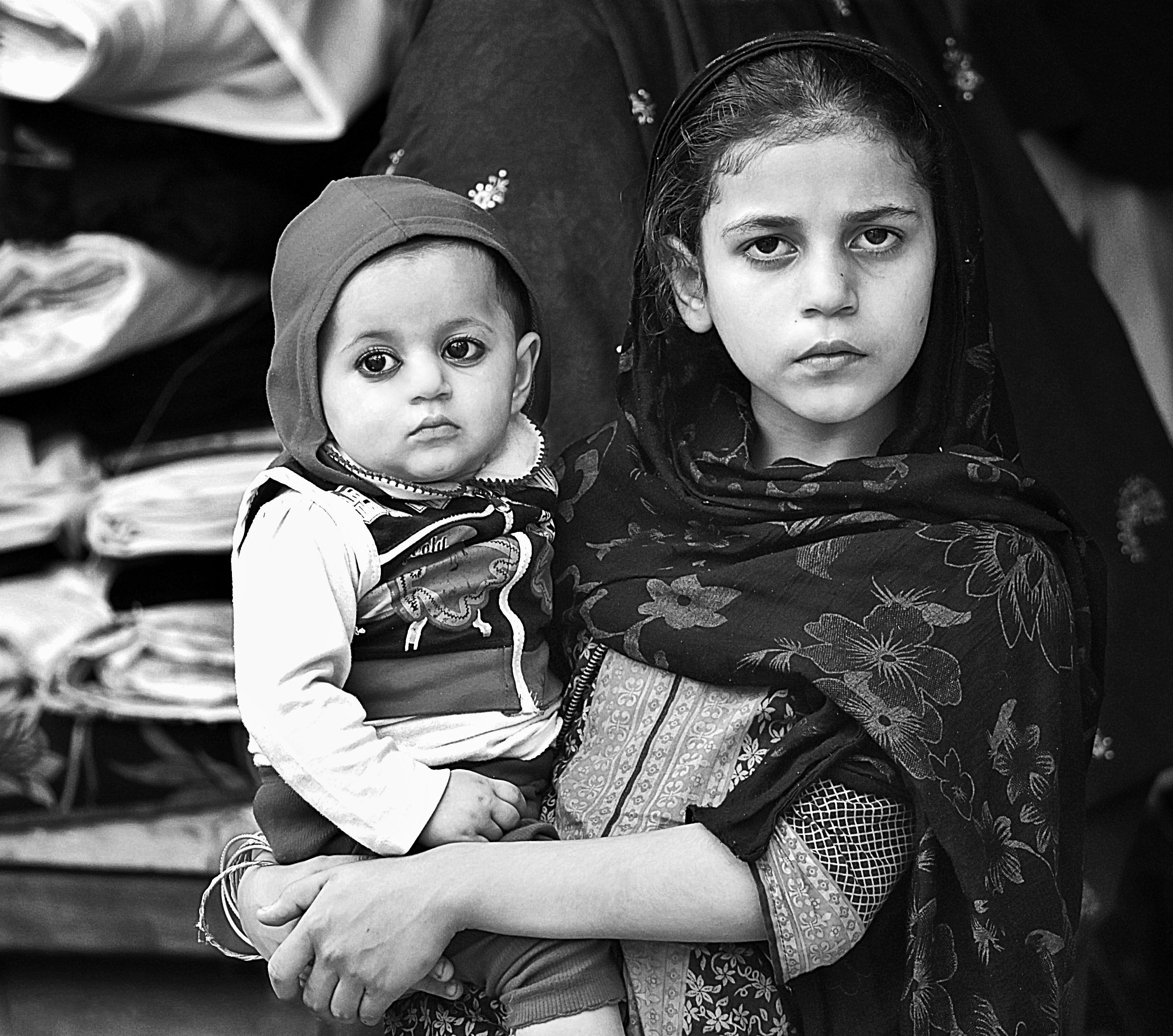

There are certain realities that a nation must confront at specific times. For us, this reality is that gender inequality is a drag on our progress, which we cannot wish away. Our debates about lack of competitiveness, the poor state of education, institutional rot and a host of other issues rarely intersect with the discussion on women. Pakistan, as a country, has a responsibility to its citizens that it hasn’t fulfilled because, by choosing not to utilize a large chunk of its human resources, it has compromised on the quality of life for everyone who lives here.
Women’s emancipation is a hotly debated topic in Pakistan, as is the issue of gender inequality. But both are being discussed from the wrong perspectives. People argue as if gender equality is either a moral virtue that ought to be enforced regardless of consequences or a foreign concept that ought to be resisted because it departs from our traditions. Both positions are intellectually dishonest because gender equality is not an end but a means to an end, namely Pakistan’s progress as a country. Our ability to provide our children with a better life than we have had depends on us eliminating gender inequality as a factor that reduces our collective potential.
A simple measure of our level of development as a country ought to be how much potential we leave undeveloped simply because of prejudice and bigotry. Our failure to educate our children properly, to utilize the best and the brightest among us, to provide a conducive environment for research and innovation, are all manifestations of Pakistan’s inability to maximize its potential. And this loss is borne by all of us, even by those who erroneously believe they have nothing to do with gender inequality.
This is especially true for the type of country we are trying to build today. The twenty-first century is not the age of natural resources but the age of ideas. The strength of nations is no longer measured in the quantity of minerals but in the number of ideas its people can develop. Our ideas and people are Pakistan’s new resources, and we cannot utilize them to their full potential if we continue to believe that gender inequality is a price worth paying.
But what is the price really? The easiest mistake to make in this discourse is to focus on the successes and miss the potential losses. We can all point to successful women in Pakistani society, those who have achieved a great deal in their personal and professional lives despite the handicaps placed in their way. But what we have less reason to talk about are those women whose potential was not fulfilled, the promise that never came to fruition. Girls who were kept out of school, graduate students who abandoned their studies, women entrepreneurs who were denied loans – these are the stories that ought to haunt us but rarely do. In Pakistan’s hurry to move on in its history books, it overlooks some of the most damning evidence of its failures in its treatment of women.
Our current debates about women’s emancipation are usually framed around the triumph of the few, when the reality is that Pakistan is losing out on the many. Simply put, Pakistan is not winning the war against gender inequality. Women are being unfairly kept out of the workforce, which is why they are significantly under-represented in economic activity and leadership positions across the board. They still face tremendous barriers when entering the field, especially when looking for formal employment, and are often denied promotions or opportunities for advancement and upward mobility. They face a hostile work environment that does not encourage them to pursue careers, take risks, negotiate, and lead. They are not given the same leeway in taking maternity leave, given the same benefits, bonuses or opportunities for professional development as their male colleagues. In other words, Pakistan does not give women the tools to earn a living, to participate fully in society. Our failure to give women these tools is a waste of national potential and ought to be of concern to all Pakistanis.
When people talk about women’s rights, they usually mean formal rights, which is another misplaced priority. Equality cannot happen overnight and simply announcing it is not enough. A more honest debate about women in Pakistan ought to focus not on what ought to be different but on who ought to act differently. The problem with gender inequality has always been that it is treated as a women’s issue rather than a Pakistan issue. All Pakistanis are losing out on the promise of a more competitive and prosperous country because of our inability to deal with gender inequality. The same economic opportunities get limited because society does not have the capacity to utilize the talents of half of its population, male or female. Gender equality ought to be a national security issue because if we are incapable of treating women as equal members of society, we will continue to suffer from the rot that comes with such prejudice.
That is also why we ought to re-focus our debates about women and power, women and education, women and the workplace, in a new light. Instead of arguing about women’s empowerment, which positions women as subordinate to the process, we ought to be talking about enabling women. That change ought to start with education, which is the most important area of women’s empowerment debates. Everyone agrees that girls need access to education. But once girls are given an education, what happens next? We can measure the success of our investment in female education only in terms of Pakistan’s overall success as a country.
The same goes for employment opportunities. Women are no longer content with being confined to the home, which is why they demand jobs as much as resources. But jobs ought to be a means to Pakistan’s overall prosperity, not an end in themselves. We cannot create an environment in which women can thrive in the workplace if we are still trying to apply old rules to new realities. We ought to rethink the workplace and Pakistan’s relationship with it. Jobs should reward talent, regardless of gender. Pakistan can harness the best and the brightest regardless of gender if its workplaces are made more responsive to diverse needs. But such responsiveness should not be a special favor for women but rather the standard for excellence for workplaces across the country.
Education and jobs will not be enough if we do not think through more broad institutional changes to achieve Pakistan’s goals. The truth is that if families continue to operate under traditional patriarchal rules, gender equality will remain an aspirational goal. The family is the first institution that children interact with, and it is where they learn the rules of engagement for the rest of society. Unless there is a cultural change, families will continue to operate as they have for centuries. They will continue to deny daughters the same opportunities as sons and place restrictions on their ambitions and aspirations. And this will continue to happen unless we have institutional changes that make such restrictions illegal and punishable. Until such time, schools and other institutions will continue to spend time and resources trying to undo the damage done by families, which is an enormous waste.
That is why we need to change our rhetoric around gender equality in Pakistan. The sooner we start talking about equality in terms of sharing, the sooner we get there. Shared values, shared resources, shared opportunities and shared responsibilities are what Pakistan needs most. In other words, we need to think of gender equality issues as shared problems, and we will have more success in addressing them. Fathers who respect daughters should work with mothers who believe in their sons to ensure the children grow up without such prejudices. Similarly, parents should think of education as sacred and invest in it. Employers should think of hiring talented but underprivileged women as an investment in future returns. Imams should preach about shared values rather than hold back on their sermons when it comes to equality. Lawmakers should think of legislative measures as ways to build better institutions rather than as special favors for women. Gender equality will happen when everyone thinks of themselves as contributors to the overall success of Pakistan in building a more egalitarian society.
Our biggest challenge is to think through what institutions and systems need to change if we are serious about giving everyone a fair chance. Pakistan will not achieve its development goals if we continue to deny talented individuals the opportunity to contribute to the country’s growth. That is the price of gender inequality.
Beyond Good Intentions
Recognizing the price of inequality is one thing; every society can critique itself, announce new social policies, and congratulate itself on its victories. But few can confront the mechanisms and structures behind inequality. Pakistan has no shortage of rhetoric on women and development. It has a dearth of action in making sure principles translate into practice. If Pakistan wants to make gender equality a priority, it needs to stop thinking about it as a women’s issue and start viewing it as an investment in the country’s future. In short, it needs to think strategically.
To begin with, it has to change the discourse around gender equality. Instead of viewing equality as a concession to women, it must see it as an investment in the country. It has to change the conversation. By championing equality as an instrument of development, Pakistan will find that achieving it entails addressing several other issues as well. Greater equality in education, for example, will create better educated citizens. Better institutions will lead to more productive workplaces. Gender equality, in other words, is not end in itself. It is a catalyst for achieving other developmental goals. Equality is multiplier. By investing in women, Pakistan will benefit all of its citizens.
Such an investment should begin in the home. After all, it is in families that children are taught what it means to be a man or a woman. Before they enter school, children learn by observing their parents. It is in the family that they learn about dignity and leadership, generosity and sacrifice, responsibility and selflessness. It is no surprise, then, that families play such a crucial role in shaping future leaders and responsible citizens. By encouraging their daughters to take up leadership positions and showing their sons that they should respect their mothers, fathers, and sisters, families can begin to change societal attitudes towards women. Unless Pakistan addresses the root causes of inequality, legislative action will have only limited effect.
Secondly, education must become the foundation stone for Pakistan’s equality agenda. The government should strive not only to increase enrolment and pass marks but also to ensure that students are empowered to become critical citizens. School curriculums and syllabi must nurture healthy social relations and encourage collaborative, innovative, and inclusive problem solving. Classrooms need to provide models for achieving excellence, regardless of gender. By doing so, Pakistan can graduate to producing critically aware citizens who will contribute to the country’s economic and human capital.
The workplace is Pakistan’s third priority area when it comes to achieving gender equality. When it comes to women in the workplace, Pakistan is still obsessed with the idea of making women fit the workplace. A more mature approach would be to make the workplace fit for women. By providing equal opportunities in recruitment and promotions, professional mentoring, and flexible working conditions, Pakistan’s businesses and government can ensure that they are attracting the best talent available, male or female. By building a more equitable work culture, Pakistan can enhance its human capital, its institutional integrity, and its corporate competitiveness.
Pakistan’s private sector needs to understand that it occupies a privileged position in promoting and advancing gender equality. Not only does it could set trends, but it also has the responsibility to do so. Every time companies choose empowerment over exclusion, they send a signal to society that valuing diversity and encouraging inclusion can enhance institutional credibility and profitability. The private sector has an opportunity to be a gamechanger in Pakistan’s reform process.
The media has a similar responsibility. By showcasing a diverse range of women as role models, Pakistan’s media can normalize the idea that women are equal members of society. When women are shown as victims of domestic violence, or as exceptions who have overcome years of oppression to attain success, the media perpetuates the notion that women are somehow lesser members of society. But by depicting women as role models in science, education, engineering, judiciary, media, commerce, art, research, civil service, and leadership, Pakistan can begin to see an increase in women taking up these professions. The media needs to realize that it has the ability to change perceptions, for better or for worse.
Civil society, religious scholars, community leaders, educators, and others have a responsibility as well. They have to understand that achieving gender equality is not about imposing change but about building consensus. Too often, conversations about women have been about rights and entitlements. What these conversations miss is that achieving gender equality will make society more just, moral, disciplined, and responsible. Women’s organizations should be engaging in dialogues about gender equality to strengthen, rather than weaken, Pakistan’s social fabric.
The government has an important role in playing as well. It is vital that it adopts a pragmatic approach to achieving gender equality. Laws and policies need to be designed with an eye on implementation and not on image. By focusing on providing quality education and healthcare, accessible transport and technology, childcare and training, the government can create an enabling environment in which women can realize their true potential. It must invest in making institutions accessible and accountable to all.
Pakistan’s youth can be the driving force behind the country’s reform process. They live in exciting times. Unlike any generation before them, they have unprecedented access to information and ideas. At the same time, however, they must realize that simply sharing ideas is not enough. They must engage in sustained, deliberative dialogue to develop a new social contract. This means taking their time, being judicious in their judgement, and not letting their frustrations with the status quo prevent them from listening to each other. They must understand that true change will come only when they are committed to working together to overcome barriers, whether in their homes or in a wider society.
Pakistan’s youth must also realize that a truly progressive country is not defined by its victories but by its ability to overcome its failures. Pakistan has had no shortage of bold ideas and big promises. Unfortunately, too many have failed to deliver on the ground. The youth must rise to the challenge and ensure that Pakistan learns from its mistakes. In short, they must have the humility to accept that achieving gender equality is not about winning or losing but about building a stronger society. In doing so, they can ensure that gender equality becomes an integral part of Pakistan’s social contract.
While Pakistan’s youth may have access to unprecedented opportunities, they have to understand that Pakistan’s greatest strength has always been its people. Equality will come when these people feel empowered to contribute to the country’s development. It will happen when ordinary Pakistanis see their potential realize itself. It will come when Pakistan’s daughters are free to take up leadership positions, when its sons respect their sisters, mothers and daughters. It comes when society stops tolerating the status quo and starts demanding change. And it will come when Pakistan understands that gender equality is an investment in the future.
In short, Pakistan must think strategically about gender equality. It has to ensure that its policies and actions are coherent, focused, and impactful. It has to ensure that it is making investments that will yield returns in the form of a stronger, more prosperous Pakistan and most importantly, it has to remember that while everyone has an opportunity to participate in the reform process, everyone has a responsibility to do their part.