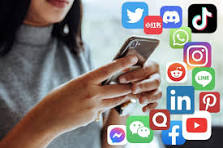
Social media refers to online platforms that enable users to create, share, and interact with content. These platforms have transformed the way we communicate, access information, and connect with others. With millions and billions of users worldwide, social media has become an integral part of modern life. Social media has revolutionized the way we connect, share, and interact with each other. While social media offers many benefits, it also has some negative effects on individuals and society. Some popular social media platforms include:
“Social media is not a tool, it’s a slot machine.”
– Tristan Harris
Advantages of social media :-
Social media bridges gaps, connecting people all over the world.
Social media allows instant access to news, knowledge, and educational resources.
Social media also allows platforms for marketing , entrepreneurship, and career growth.
Social media also amplifies voices for social justice, awareness, and activism.
Social media allows online communities and connections that can provide emotional support.
“The best social media is the one that makes you feel connected”
Social media gave access to mental health information, resources, and professionals.
Social media allows users to share text, images , videos and live streams .
Through social media, users engage with content through likes, comments, shares, and reactions.
Platforms use algorithms to curate content, personalize feeds , and suggest connections.
Disadvantages of social media :-
Misinformation: spread of fake news, propaganda, and biased content.
Excessive screen time impacting productivity and relationships.
Social media consists of a lot of privacy issues like data breaches, surveillance, and online harassment.
Compairing lives with social media influencers, vloggers , content ceator can create feelings of inadequacy.
“Don’t compare your behind the scenes with somone else’s highlight reel”
Unrealistic beauty standards and curated content can lead to body image issues (Low self-esteem).
Exposure to screens and social media notifications can disrupt sleep patterns.
Spread of fake news and biased content can mislead and manipulate users, impacting public opinion and behavior.
Social media impact on our mental health:-
Social media’s impact on mental health is a complex issue .
Comparing lives with others, cyberbullying, and online harassment can contribute to anxiety and depression.
Sleep disturbance is the major cause of social media on our health.
Low self – esteem and FOMO (Fear Of Missing Out) causing feelings of inadequacy.
Excessive use can also lead to loneliness, tiredness, etc
“Social media is not a substitute for real life”
Social media platforms: A Comprehensive list
Social media usage is booming worldwide, with 5.66 billion people, or 69% of the global population, actively using social media platforms. This number is expected to reach 5.85 billion by 2027. The average person spends around 2 hours and 23 minutes daily on social media, engaging with approximately 6-7 different platforms.
Key Statistics
Facebook (3.07 billion monthly active users)
Whatsapp (3 billion monthly active users)
Instagram (3 billion monthly active users)
Massenger (1.01 billion)
Tiktok (1.582 billion)
Youtube (2.504 billion)
Snapchat (900 million)
X (formarly twitter) (550 million)
Quora ( 400 million )
Pinterest (570 million)
Trends and Insights
Social media usage grew by 4.8% years over years , adding 259 million new users .
80% of users prefer visual content images/ videos over text posts .
70% of user check social media first thing in the morning .
Gen Z spends 81% more than 1 hour dailyon social media , with 60% exceeding 3 hours .
These reports highlight the significant impact of social media on daily life and business strategies.
“Social media is a great way to connect , but a terrible way to communicate”
Are we in control of our social media usage, or are algorithms driving our behavior ?
How often do we mindlessly scroll through feeds versus using social media with a purpose?
Can we imagine a day without social media, or have we become dependent on it?
Are we using social media to connect with others, or are we substituting online interactions for real-life connections?
Do social media platforms prioritize our well being , or do they exploit our vulnerabilities?
Are we aware of the data social media collect about us , or have we become dependent on it?
To mitigate these risks, it’s essential to maintain a healthy balance between online and offline life, set boundaries, and prioritize real-life connections. Limit screen time and prioritize offline activities. Verify information through credible sources before sharing or believing it. Follow accounts that promote positivity, education, and well-being.
Breaking Free From Social Media Addiction
limit your daily social media time (e.g 30 minutes)
use apps like Screen time , freedom, or moment to monitor your usage.
Keep phones out of the bedroom, dining area, or during meetings.
Check social media at specific times (e.g during breaks).
Engage in hobbies ,exercise , or spend time with friends and family.
Delete social media apps from your phone or limit access.
Be aware of your emotion and trigger that lead to excessive usage .
Read books, articles, or news instead .
Share experience and support with others.
Celebrate small victories with non- screen activities.
In conclusion, social media is a powerful tool that requires mindful usage. By acknowledging its dual nature and taking proactive steps, we can maximize its potential while protecting our well-being.
“ Social media is a double – edged sword. You can either use it to empower or destroy.”