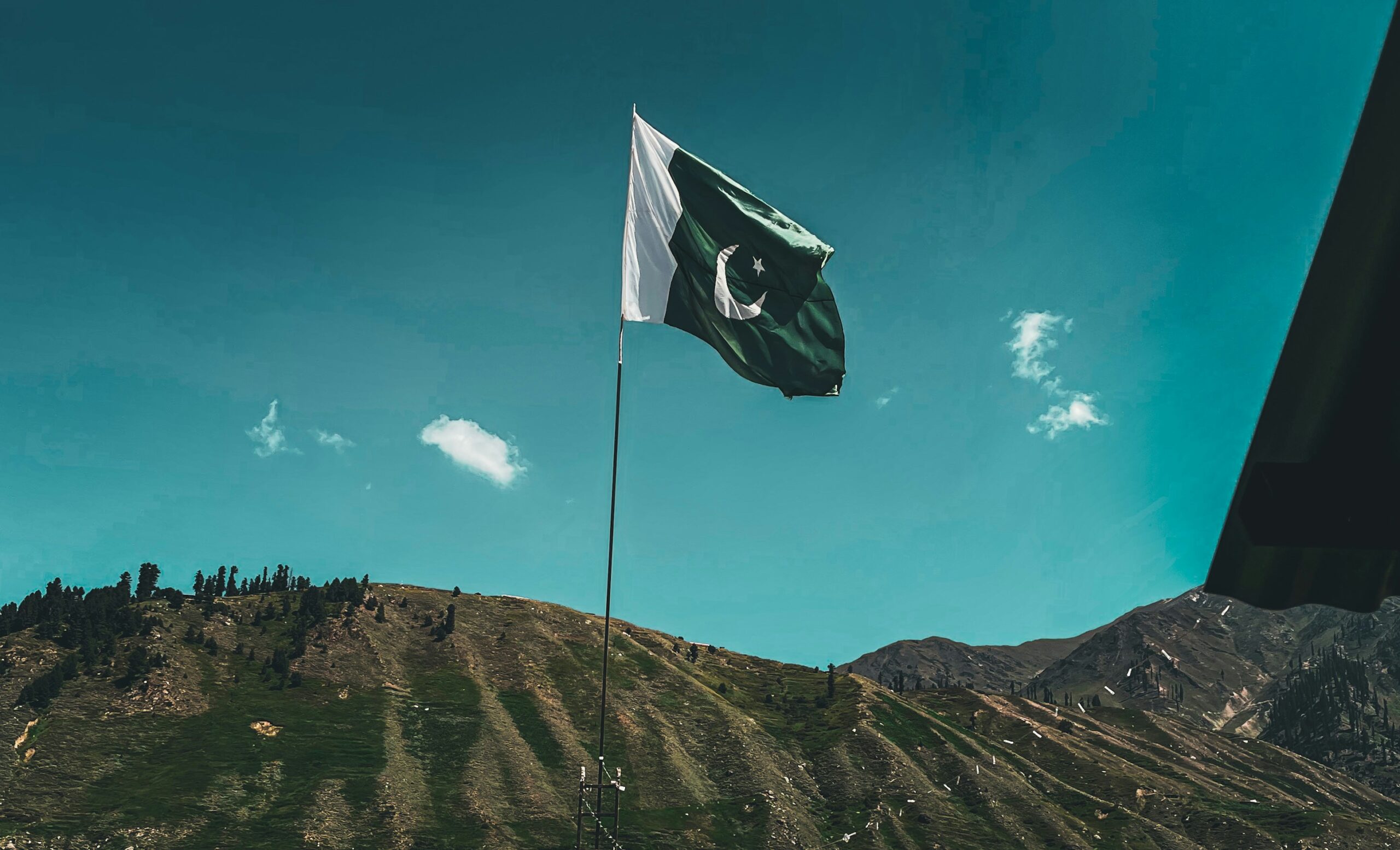
Pakistan is back on the crossroad of choice. The problem that has faced the country today is not one of political transformation or economic salvaging but about direction; whether Pakistan finally shifts into a stable and reformed country or will it sink into another decade of crisis management, institutional stasis, and citizen disillusionment?
This question is not scholarly to the average citizen. It is experienced when prices are increasing at a rate higher than incomes, whenever a young graduate is unemployed after hunting fruitlessly, and whenever there is uncertainty over the future instead of optimism for a better life. The situation that Pakistan faces today can be attributed to structural frailties that have always been present in this country and the various governments have not been able or willing to deal with them.
The source of the issue is prolonged political instability. In the past years, Pakistan has been experiencing recurring conflicts between its political players, political institutions, and the state. Rather than constructive democratic competition, politics have turned out to be an exercise in zero competition survival. Governments are focused on staying in power than effective governance and the opposition group focus on destabilization as opposed to constructive engagement. This has resulted in a series of demonstrations, judicial struggles, interim governments and stalling transitory decision-making that cripples the state.
The effect of this instability is disastrous in economic terms. Predictability is the most prized asset to the investors, whether domestic or foreign. Pakistan is the contrary. Constant changes of policy, unpredictable regulations and politics discourage long term investment. The economy swings itself round one IMF program to the next, and not curing the disease, but just treating its symptoms. Structural reforms- to expand the state-owned enterprises, reform the state, and enhance governance are still inconvenient politically and thus delayed.
Inflation has assumed the most conspicuous representation of the state failure. Unless food, fuel and electricity prices are lowered, millions of people are on the verge of survival. The middle class which was previously considered to be the stabilizing factor of Pakistan is dwindling in number due to taxation, security of jobs and reduction in the purchasing power. Once the educated population of a country is trapped in the economic system, social cohesion starts to develop.
The loss of institutional credibility is also a cause of concern. Institutions can be used to establish strong states that operate in a predictable and unbiased way. However, in Pakistan, the institutions tend to become the subject of political wrangles, which harms the perception of people. In cases where accountability is selective and justice is not seen to be even-handed, citizens do not just lose trust in governments, but rather the system as well. Such confidence loss is much more threatening than any economic measure because this undermines the social contract between the state and its citizens.
Another outstanding fault line is still the civil-military relations. Although the military has been predominantly seen as a major stabilizing element in times of crises, the future development of Pakistan is pegged on a more explicit constitutional balance where the civilian institutions are in charge and act responsibly and efficiently. Without an agreement on this balance, political instability will be experienced, irrespective of whoever is in power.
The disillusionment of the Pakistani youth may well be viewed as the greatest threat of the long-lasting uncertainty. Pakistan is supposed to be leveraging on a demographic dividend with over sixty percent of its population being under thirty. Rather it has a demographic threat. Youth are increasingly finding migration as the only way of earning dignity and opening opportunity. This brain drain is a silent crisis: the nation is losing its most precious assets, its human capital, at the moment when it is being the most demanded.
However, although this is a bleak situation, Pakistan still has a choice. Its history proves its high resilience. The country has a substantial local market, strategic geographical positioning, and an entrepreneurial and competitive diaspora across the world. What it does not have is not potential, but political will and policy continuity.
Stability does not mean that no one disagrees; it only means that there are rules to which everybody is subject. The country is urgently in need of a bottom-up political agreement on ultimate national interests: economic reformation, democratic survival, and institutional autonomy. The political actors have to be ready to acknowledge that short-term benefits made by confrontation only lead to long-term losses by all.
Hard decisions will be required to make economic recovery. Populism based on handouts through subsidies should give way to social protection that is selective. Reform of taxes should not focus on putting pressure on those who have already been cooperative, but other formidable sectors should be approached positively. Possibly, this means that state-owned enterprises that are consuming state resources need to be reorganized or shut down. Such actions are politically dangerous to take yet delaying the actions only increases their price in the future.
It is also significant to regain trust of the public. Stability is the privilege of transparency, the rule of law, and the freedom of expression. When citizens feel that sacrifice is made equitably and that decisions are made in the best interest of the country, they will be willing to suffer as well.
Today, Pakistan is facing the truth of the matter. A decade more loss will increase poverty levels, polarization, and the damage on national cohesion would be irreparable. Stability, however, needs courage: courage to reform, to compromise, to put the country first in partisan interest.
It is not the speeches raised and the slogans raised but the decisions made that will be judged by history. Pakistan can keep falling into crisis after crisis or it can eventually take a route to stability that is based on reform and accountability. The crossroads is not imaginary–and so are the effects of the course taken.